Wednesday, 28 August 2013

Rehoboth

Before we left India, we were able to spend a couple of weeks at Rehoboth, in Thrissur, Kerala. In India, due to cultural and social pressures, girls are often seen as a burden for the family. Unwanted, young girls will often be disowned. Rehoboth means "God has made a place for us." How cool is that?! A home was started for girls who are not being looked after by their families. It is a place where they have a home and they are wanted. Like all good organisations, it has good leadership- the matriarch- a kiwi woman who has been living in India so long that she's now only kiwi on the outside. She is the closest thing to Mother Teresa that we ever got. The Rehoboth campus has a variety of areas that it works in, including a Bible College, an International School and the Girls' Orphanage, home to roughly 135 girls and a few young boys.

Rehoboth was looking forward to having an engineer and landscape architect on site for the week. We thought about taking up the challenge but in the end the pros- Peter and Elizabeth- were put to work landscaping in preparation for an upcoming conference.  People power is considered more cost effective than machinery in India, so anyone who could dig was part of the team. Some of the teachers even showed the students how it is done- and that's no small feat in a country where hierarchy is an excuse not to get your hands dirty.
One week and a few cuts and bruises later the college looked like a tornado of love had swept through! Mission accomplished between downpours. In other words we only worked mornings due to the 2:07pm monsoon that was never late!

Between football, cricket, volleyball and digging, Jeremy managed to squeeze in a bit of ESL teaching. It was good to see some of the students from 2 years back as well as get to have fun in the classroom.

Doctor Karina lived up to her name. She did some first aid training with the teachers from the International School. If she wasn't bandaging up a sore foot or teaching someone else how to do it, she was enjoying taking special portrait photos for each child at the Orphanage. Each photo was printed and the children were given a copy to have for themselves as a gift, with the reminder that even if they don't have a biological father, they have the King as father, making them princesses :)

Our time was brief, but it was so good! The generous welcome and love shown by the Rehoboth family always has so much of an impact, and though we arrived with the idea of bringing help and care to the Rehoboth family, in reality it was the other way around.

Extra snaps- candid.

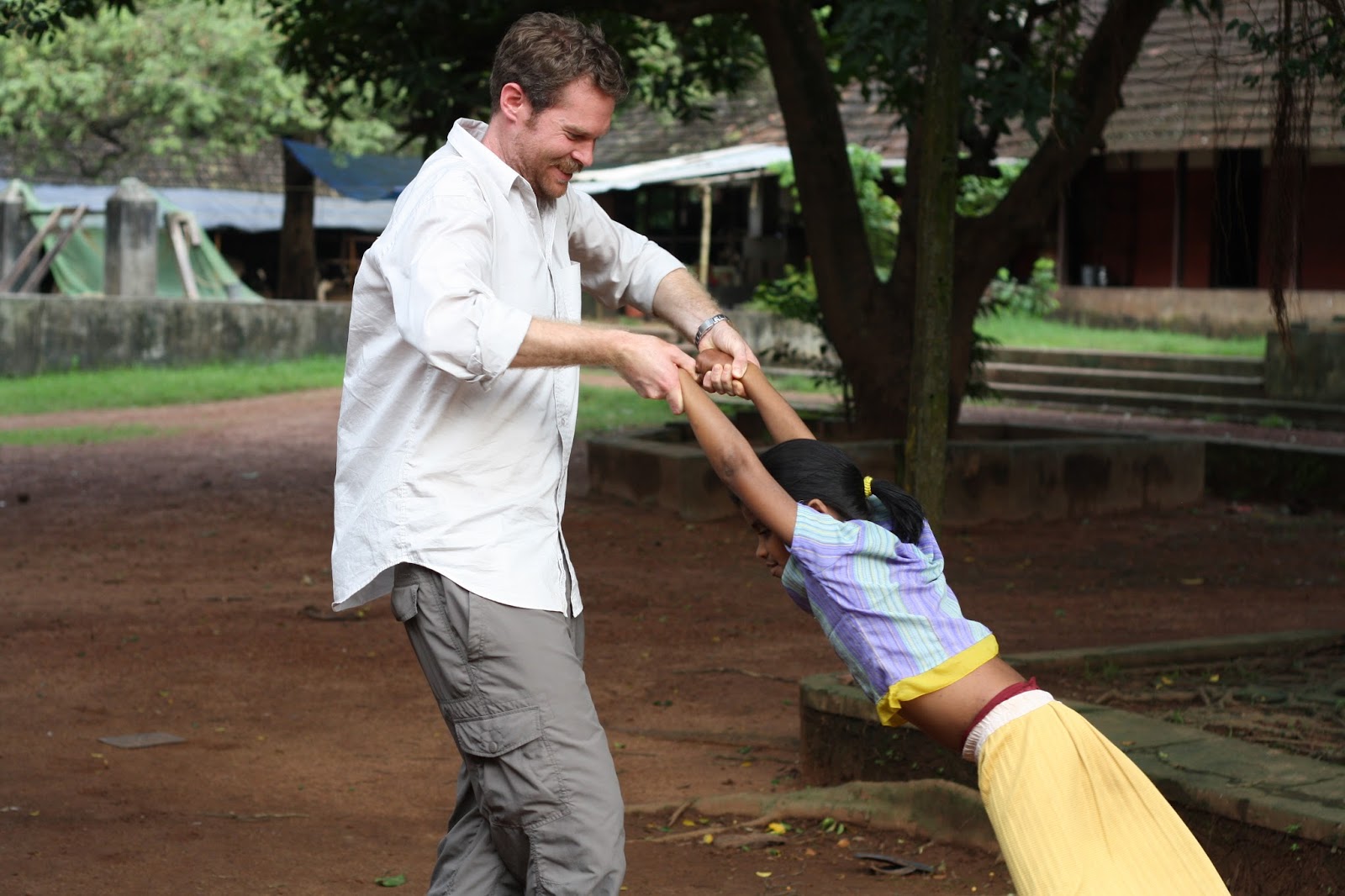
Pete swinging around girl number 107 of 135.

Landscaping... just getting started.

The victory photo.

Mitre 10 Dream Home.
A Kurdish proverb for our time at Rehoboth girls home? "If God didn't like beautiful women, he wouldn't have made them!"

Wednesday, 14 August 2013

Update! Mysore, studies, and other happenings

Several weeks ago, Jeremy and I headed to Mysore with Peter and Elizabeth where we did the tourist thing. We took the train (about 3-4 hours) from Bangalore early Saturday morning, stayed one night and then headed home the next evening. Highlights of the trip included:
  • figuring out how to travel by the local bus to a nearby bird sanctuary where there were lots of birds and the occasional crocodile, much to our excitement
  • going up Chamundi Hill, again by local bus and checking out the view of Mysore from the top
  • walking down the 1000 (ish) steps of Chamundi Hill and feeling the effects for a day or so after
  • exploring the local market with rows and rows of bananas, coconuts, bangles, coloured dyes, flowers and anything else you might want
On the train - a particularly comfy ride


Lunch on banana leaves!

Bird Sanctuary on the Cauvery River


Up Chamundi Hill looking down at Mysore

One Thousand Steps


Pilgrims walking up the steps, placing coloured powder on each step as they go

Coloured powders at the market

SAIACS studies

2 months of classes have come and gone. Our first month-long-module was a focus on the major religions of the world. The hot topic was understanding how people come to have certain belief systems and world views, not to mention how our own world views are shaped. What better way to grasp the paperwork than to visit the places. Our field trip consisted of time at a Mosque, a Buddhist Temple, a Zoroastrian Fire Temple, a Hindu Philosophical Centre, a Sikh Temple and both a Svetambara and a *Digambara Jain Temple. India is a super diverse place so you never have to travel far to see differing beliefs and practices.
It was a really interesting and challenging experience but nothing had the Jesus factor that is changing and compelling us to care for the world we live in.
*If you want to to know about some different religious dress, the Digambara sect is it. But be warned, search on Wikipedia, not Google (or you will get more than you bargain for!!!)

July was focused on Cultural Anthropology where we looked at people groups around the World – not just different countries, but whatever causes a group of people to identify as a unit. As part of the paper, we had to make a video with gospel-hope, bringing change and transformation to a people group. Jeremy's group chose women in bonded labor – girls and women who are sold into the sex trade in India. We hope this impacts you- that's why we made it:


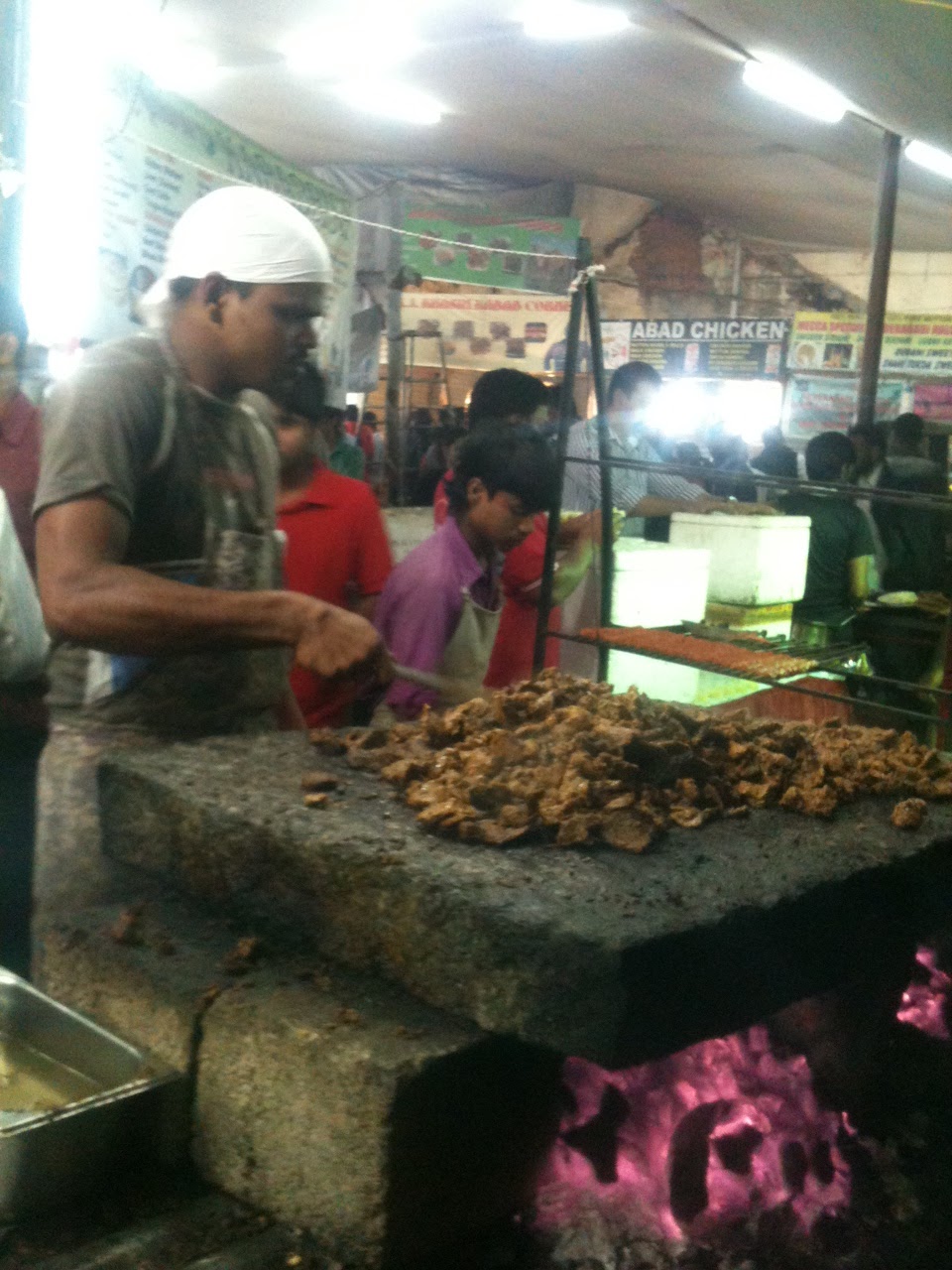
During the Muslim month of Ramadan all shapes and sizes would flock to the street stalls after dark to break their fast. There were stalls selling kebabs, grilled meats, pastries, Indian sweets, milkshakes, desserts and a myriad of dates. Highlights: Grilled chicken marinated in coriander and mint, trying camel for the first time, and seeing meat cooked on a huge slab of granite over a wood fire. YUM.

Trying camel

Jeremy in date-heaven
 
McDonalds, eat your heart out
A Kurdish proverb: "Bread and gratitude are eaten together" - we have feasted on the blessings and joys that India has to offer, and we are so grateful for the many opportunities and wonderful people we have met!

Tuesday, 30 July 2013

Whoever is fond of cream should take the cow around with him. (Kurdish Proverb)

No matter where you go in India, you are bound to find two things: people and cows. Over the last few weeks we have come to understand where the phrase "Holy cow" came from. Cows for the majority of Indians are auspiciously auspicious and so they are welcomed almost anywhere. Many locals believe that the cows hold blessings and so when they build a house or buy a new apartment, they lead a cow inside to leave a blessing- we've even heard a story of leading a cow up to the ump-teenth floor via the lift!

Here are the best photos we've captured over the past 2 months:

Mall Cows
"Share the road" given a new meaning here...
Patriotic cows... (disclamer- we found this on the net and liked it too much!)
What a load of croc - that's no bull ;-)
Trying to blend in.
Street vendor cow.
Median barrier cow.
Tractor cow- the sign of modernisation.
Nandi (the bull god).
Window shopping.

Thursday, 20 June 2013

Water, Weddings and Whiskers.

Last weekend we were invited to attend the wedding of a relative of a member of staff here. Possibly our invitation was because of close affiliation with the married couple and their family? (nope), or was it to do with the fact that our parents are the directors of the college where they work? (maybe), or did it have something to do with our white faces? (maybe yes). Going to an Indian wedding- exciting times! (Interestingly this excitement of foreigners to be going to an Indian wedding is not shared by the locals to quite the same extent)

 
Because the actual wedding ceremony had already taken place earlier with a smaller crowd at the local village convent, we headed to the auditorium for the reception:


While we waited for the bride and groom we were "entertained" by local musicians and singers, and the two television screens at the front which alternated between Bollywood-style montages of random couples, to live shots of the actual couple having their photos taken.


The couple arrived (looking dazed by the paparazzi that had been hired to capture every minute), made their entrance, the crowd kept chatting to one another, the first few photos of the couple were taken on stage and then the race was on to get to lunch and then have your picture taken up on stage with the happy couple.


We had a good time: we listened to music without the bride and groom; we ate a meal without the bride and groom; and then finally we got a photo with the bride and groom. If you were bold, you could smile at the camera as well; otherwise the customary blank formal face would do to blend in. Seeing the sights, tasting the dishes and then seeing a stray dog walk through the dining hall- everything you might expect to see at a traditional Indian wedding. It was a bit tainted when we heard that the chef had undercooked the meal and therefore had to flee the wedding to avoid being beaten up by the special couple's families.

I'm glad that our chef didn't ruin the food at our wedding- I hate to think of the thrashing that Karina's sisters would have given him!
The bride and groom
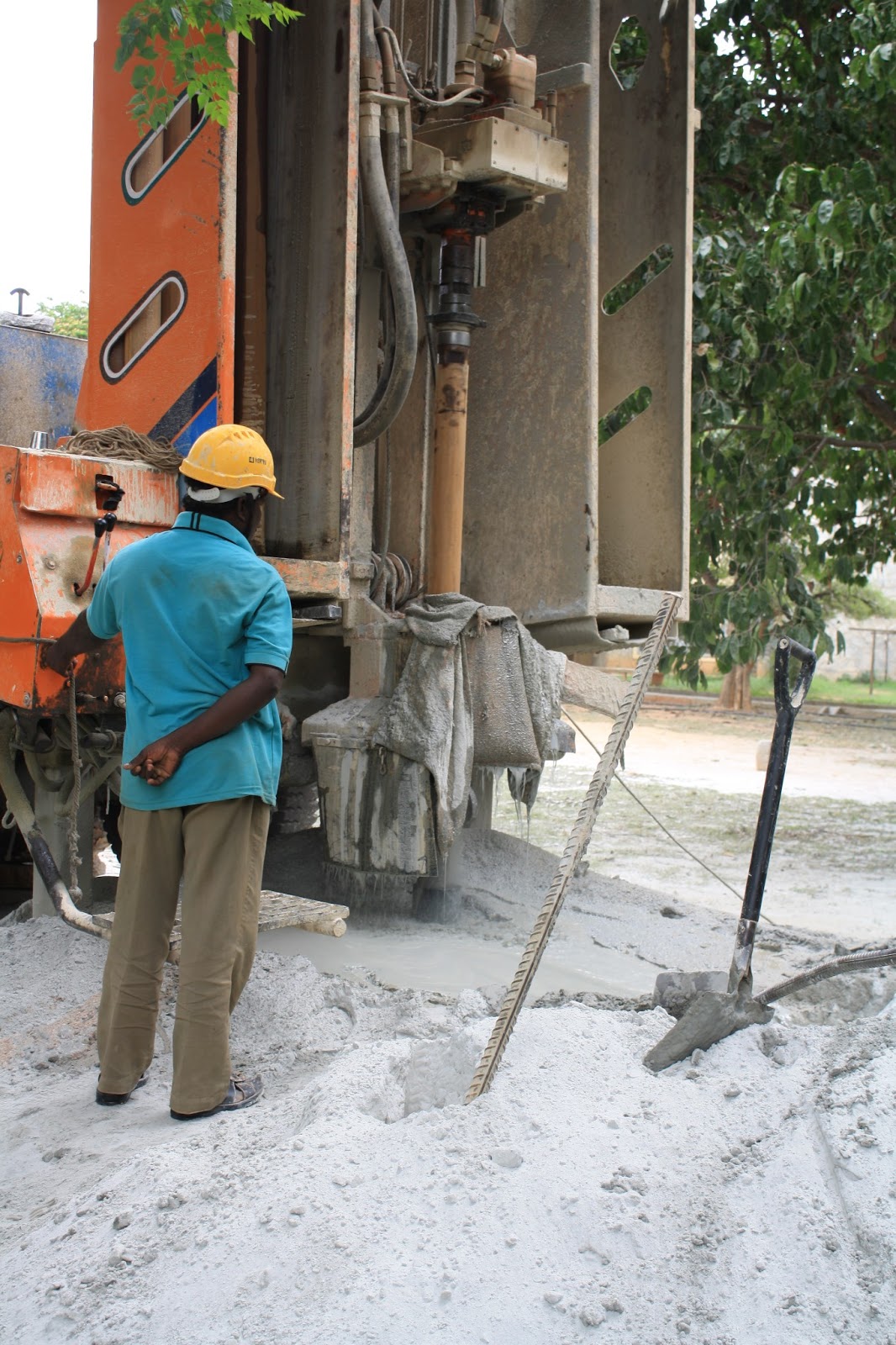
Our college has been out of water for a while so it was time to start drilling. As the African proverb says: "The usefulness of a well is known when it dries up."  So we got together, asking God for safety for the drillers and a bit of H2O.  It took two days of drilling in different locations, but finally, today up came the stuff that life needs! - 850 feet deep (that's like the height of the SkyTower observation platform!).

The team.

The Machinery.

And it's off...

Piles of dust later...
Bingo!

I did a little sociological experiment yesterday. I wanted to know what "a shave" meant for the average barber in India. So I went in to the local Barber's and asked for exactly that- "a shave". Ten minutes later I concluded that the upper lip is not considered as part of the face when it comes to shaving.


Adeesh- my barber- then continued by saying "I want to make your moustache the same as mine" He pointed at his, including his soul patch, and then said "black colour". The end result: I am not only building solidarity as I become inwardly like the locals, but also my external look!

Our proverb for this one: A man without a moustache is like tea without sugar!

Monday, 3 June 2013

"A cup of coffee commits one to forty years of friendship"

Two friends of ours have met us in Bangalore 4 days into our time here. Peter and Elizabeth Brown flew into the not-so-organised chaos yesterday morning.
This is significant to us for many reasons: Jeremy and Peter flatted together for most of three years. “It was generally a good experience... at least until the day we decided to start rooming together.” It was at similar times that they “found” the girls who are now their wives. The two couples got married a month apart. I think that both Peter and Jeremy decided that living with their wife was neither as smelly, nor as demanding (?) as living with each other!
Yesterday we adventured together to the local village where Peter and Jeremy had haircuts and shaves at the village barber's – involving a traditional barber's blade which ended in more than a couple of nicks! We also discovered that by asking for a shave, it doesn't include the removal of hair from the upper lip (the local fashion), so Peter is now sporting a local, colonial, blond caterpillar just below his nose. Karina and Elizabeth got to know the local supermarket and vegetable stall, where a kilo of tomatoes cost NZ$1 and two flat bread pizza bases cost 40 cents. Today we ventured further into Bangalore, braving Indian traffic and the public transport system by bus and then rickshaw - the first one we caught took advantage of our naivety of rickshaw fares... that won't happen again! Besides shopping for some local clothing and jandals (known as chappals), we had our first raw exposure to beggars and a yummy 'thali' experience for lunch.

 
These friendships go much deeper than just a catch up with old mates in a foreign land. We are all here with one heartbeat – to spend some time serving our neighbors and Lord outside of our everyday surroundings. We are convinced that as we spend 2 months here studying, sharing and learning together we will find ourselves being part of a story that is world wide.
A Kurdish proverb (in the title, above) talks about how eating or drinking together obliges you to be their friend. There is a beauty in the simplicity of having a cup of coffee, but also something deeper in the sharing, something else that unites us together as well. We are looking forward to sharing many more coffees with Peter and Elizabeth, and with others here at SAIACS as the study year begins.
Last Saturday also marks six months of marriage for us – another relationship that began with a cup of coffee!

4 where there are meant to be 3: easy by Indian standards!

Saturday, 25 May 2013

Flightless birds

“Well it wasn't always a settlement.” said a friend in *S-town. “It originally sprung up as a camp for the women and children who were without refuge after the men in the north were killed. The people stayed and now it's a town. No tents anymore... bricks.”

Our hearts don't know whether to cry or rejoice. So much blood was shed and yet now a community for the displaced people to call “home”.

As the Kurdish proverb says, “God finds a low branch for the bird that cannot fly.” Our prayer is that God uses us to be part of that low branch.

After 2 months studying and spending time with family at SAIACS in South India, Karina and I will be continuing our travels into the Middle East. We will be serving as part of a team in a community project where we have the chance to bring medical training and English language lessons in an area where there is much longing for both of these skills.

The hope we find in God is what compels us to go and what allows us to be “a low branch”.